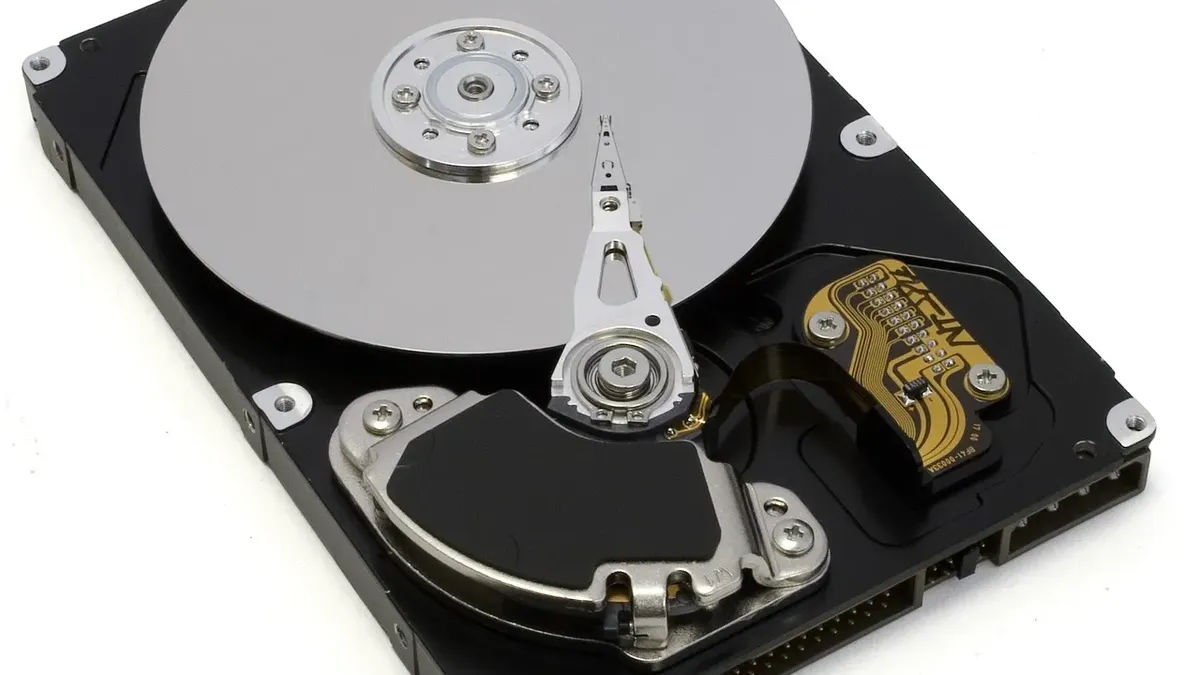
Floppotron 3.0, the orchestral computer that uses 512 floppy drives, 16 hard drives and 4 scanners to play music
You already know what an orchestra is, a one-man orchestra, and today we are pleased to introduce you… the orchestra computer!
You can do a lot of things with a lot of old hardware. But if you have talent, knowledge and programming, you get wonders like the Floppotron 3.0, an orchestral computer that produces music with 512 floppy drives, 16 hard drives and 4 scanners.
As its creator explains in your blogthe Polish engineer Paweł Zadrożniak, any electronic device that has a motor and moving parts generates some type of noise. And if you know how to cleverly combine that noise, it is also possible to turn it into music.
In this video you can see the Floppotron 3.0 in all its splendor, interpreting the classic piece Entrance of the Gladiators, by Julius Fucík. A technical and programming marvel:
It is important to realize that these are not computer peripherals producing music, but rather the music itself is created with the noise generated by turning the engine, or some of its moving parts. In the 90’s floppy drives, hard drives and scanners were quite noisy, as you can see.
From a technical point of view, the Floppotron 3.0 is a complex machine, which requires perfect coordination between the almost 550 devices involved.
For this to be possible, use controller cards capable of sending precise commands to dozens of devices at once. There’s one for the scanners, one for the hard drives, and three for the 512 floppy drives.
These cards in turn communicate with five RS485 controllers, which are the ones that connect to a gateway. This access door receives music in MIDI format, and converts it into signals for the controller cards.
Finally, a USB to MIDI converter allows you to connect everything to the PC. You can see it very clearly in this schematic:
Just as important as the hardware is the software that converts music in MIDI format into movements of motors or moving parts of floppy driveshard drives and scanners, which correspond to each note.
The result is spectacular, as you can see in the video.
If you want to know more about the construction process of this incredible Floppotron 3.0and the rest of his creations, visit Paweł Zadrożniak’s blog.
Reference-computerhoy.com
Leave a Reply