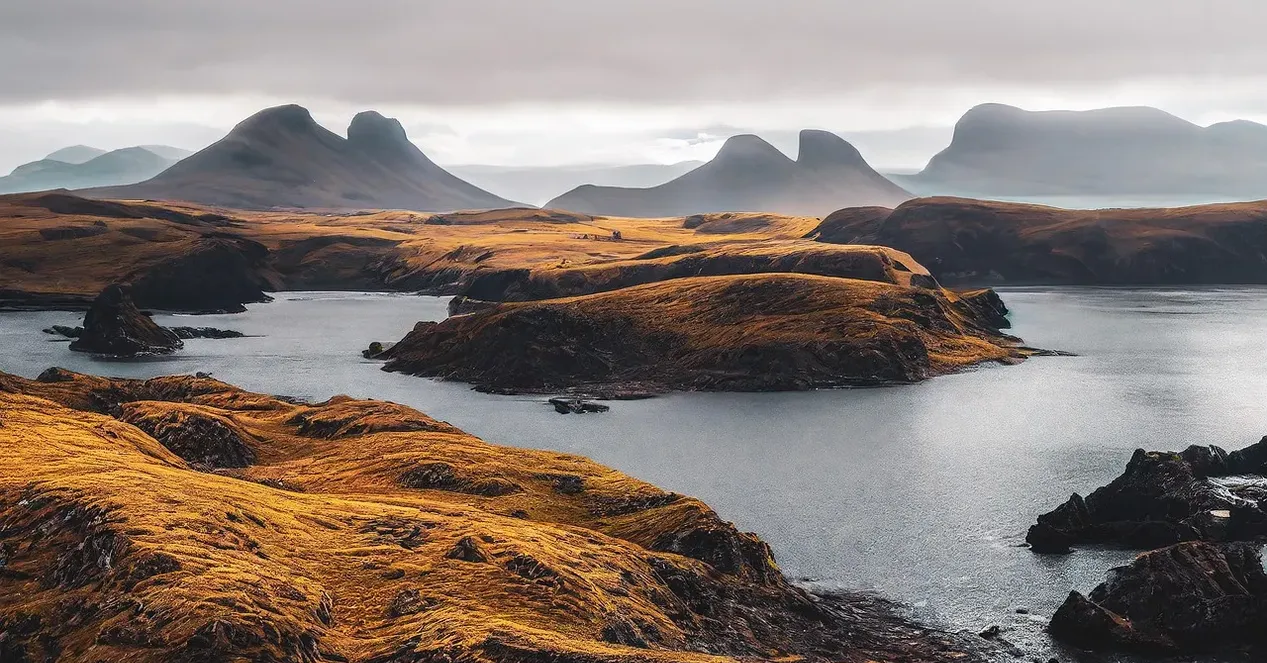
AI Art Is Challenging the Boundaries of Curation
just to few years, the number of artworks produced by self-described AI artists has dramatically increased. Some of these works have been sold by large auction houses for dizzying prices and have found their way into prestigious curated collections. Initially spearheaded by a few technologically knowledgeable artists who adopted computer programming as part of their creative process, AI art has recently been embraced by the masses, as image generation technology has become both more effective and easier to use without coding skills.
The AI art movement rides on the coattails of technical progress in computer vision, a research area dedicated to designing algorithms that can process meaningful visual information. A subclass of computer vision algorithms, called generative models, occupies center stage in this story. Generative models are artificial neural networks that can be “trained” on large datasets containing millions of images and learn to encode their statistically salient features. After training, they can produce completely new images that are not contained in the original dataset, often guided by text prompts that explicitly describe the desired results. Until recently, images produced through this approach remained somewhat lacking in coherence or detail, although they possessed an undeniable surrealist charm that captured the attention of many serious artists. However, earlier this year the tech company Open AI unveiled a new model—nicknamed DALL E 2—that can generate remarkably consistent and relevant images from virtually any text prompt. DALL·E 2 can even produce images in specific styles and imitate famous artists rather convincingly, as long as the desired effect is adequately specified at the prompt. A similar tool has been released for free to the public under the name crayon (formerly “DALL E mini”).
The coming-of-age of AI art raises a number of interesting questions, some of which—such as whether AI art is really artand if so, to what extent it is really made by AI—are not particularly original. These questions echo similar worries once raised by the invention of photography. By merely pressing a button on a camera, someone without painting skills could suddenly capture a realistic depiction of a scene. Today, a person can press a virtual button to run a generative model and produce images of virtually any scene in any style. But cameras and algorithms do not make art. People do. AI art is art, made by human artists who use algorithms as yet another tool in their creative arsenal. While both technologies have lowered the barrier to entry for artistic creation—which calls for celebration rather than concern—one should not underestimate the amount of skill, talent, and intentionality involved in making interesting artworks.
Like any novel tool, generative models introduce significant changes in the process of art-making. In particular, AI art expands the multifaceted notion of curation and continues to blur the line between curation and creation.
There are at least three ways in which making art with AI can involve curatorial acts. The first, and least original, has to do with the curation of outputs. Any generative algorithm can produce an indefinite number of images, but not all of these will typically be conferred artistic status. The process of curating outputs is very familiar to photographers, some of whom routinely capture hundreds or thousands of shots from which a few, if any, might be carefully selected for display. Unlike painters and sculptors, photographers and AI artists have to deal with an abundance of (digital) objects, whose curation is part and parcel of the artistic process. In AI research at large, the act of “cherry-picking” particularly good outputs is seen as bad scientific practice, a way to misleadingly inflate the perceived performance of a model. When it comes to AI art, however, cherry-picking can be the name of the game. The artist’s intentions and artistic sensibility may be expressed in the very act of promoting specific outputs to the status of artworks.
Second, curation may also happen before any images are generated. In fact, while “curation” applied to art generally refers to the process of selecting existing work for display, curation in AI research colloquially refers to the work that goes into crafting a dataset on which to train an artificial neural network. This work is crucial, because if a dataset is poorly designed, the network will often fail to learn how to represent desired features and perform adequately. Furthermore, if a dataset is biased, the network will tend to reproduce, or even amplify, such bias—including, for example, harmful stereotypes. As the saying goes, “garbage in, garbage out.” The adage holds true for AI art, too, except “garbage” takes on an aesthetic (and subjective) dimension.
Reference-www.wired.com
Leave a Reply